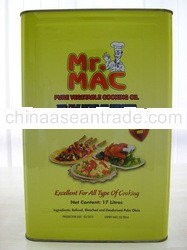




 Click for original picture
Product detail:
Palm oil products are made using milling and refining processes: first using fractionation, with crystallization and separation processes to obtain solid (stearin), and liquid (olein) fractions. Then melting and degumming removes impurities. Then the oil is filtered and bleached. Next, physical refining removes smells and coloration, to produce "refined bleached deodorized palm oil", or RBDPO, and free sheer fatty acids, which are used as an important raw material in the manufacture of soaps, washing powder and other hygiene and personal care products. RBDPO is the basic oil product sold on the world's commodity markets, although many companies fractionate it further into palm olein, for cooking oil or other products.
Splitting of oils and fats by hydrolysis, or under basic conditions saponification, yields fatty acids, with glycerin (glycerol) as a byproduct.
Many processed foods contain palm oil as an ingredient.The highly saturated nature of palm oil, while undesirable from the health perspective, renders it solid at room temperature in temperate regions, making it a cheap substitute for butter in uses where solid fat is desirable, such as the making of pastry dough and baked goods: in this respect, it is less of a health-hazard than the alternative substitute of partially hydrogenated trans fat.