



 Click for original picture
Product detail:
Made from fresh coconut meat, aged 12 to 14 months of coconut plantations certified standards.
- No chemical fertilizer. Do not use pesticides.
- Do not use herbicides.
- Do not use synthetic hormones.
- Do not use genetically modified seeds (GMO).
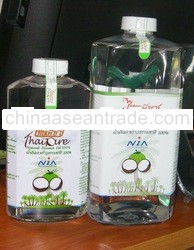
Natural, organic coconut oil.
- A scent like fresh coconut.
- Does not smell rancid smell Epigiw.
- When the eggs are clean and have a smooth texture (creamy buttery texture).
- Light texture. Easy to eat.
- The value of saturated fat (saturated fat) of the coconut in its entirety. Saturated fatty acids, especially the medium (MCF As) are three types of acid-acre Little (C8), acid car Prit (C10) and lauric acid (C12).
Features and benefits.
Natural, organic coconut oil.
Intake and utilization.
The Green Life brand natural organic coconut oil in the daily life.
- Eat 1 to 4 tablespoons a day.
- Can be used for cooking. Or fill in any type of food you want.
- Use instead of butter or margarine In all the recipes as needed.
- Mixed with warm water, hot beverages, hot coffee, hot tea to make it easier to eat.
- The rice is finished cooking. To eat meals.
- Pour it on ice cream or candy and ice.
- Use hair before swimming.
- Cleaning products.
- The body and the skin is dry.
Coconut oil.
While the coconut fiber and nutrients that are beneficial to health. But it is oil that is useful and true.
Once it is believed that coconut oil is not healthy. It has a high amount of saturated fat. I know it is accepted that the fat in coconut oil from another in a look that was different from other fats. The property has many health benefits. Coconut oil is widely recognized as a valuable health food.
Coconut oil is said to be the story. "Maintenance of the value of health in the world," which is said to be true. What makes coconut oil has value even then. What makes coconut oil from other oils. Especially in the oil with a saturated fat together.
The difference in fat molecules. Fats and oils, all kinds of molecules called fatty acids. There are two types of fatty acids. One way is the best known is the type of saturated fat. We have saturated fats. Saturated fat alone. And saturated fat combined. Another way is to classify the size of the molecule or the length of carbon chains in fatty acids. Fatty acids consist of chains of carbon atoms. The hydrogen atoms attached to. This allows us to fatty acid short-chain fatty acids (SCFA), medium-chain fatty acids (FCFA) and long-chain fatty acids (LCFA), coconut oil contains fatty acids MCFA are numerous, and fatty acids MCFA. Kea is known as medium-chain triglycerides (MCT) with
Fats and oils in our diet. A saturated or unsaturated. Whether it comes from animals or plants. Mainly composed of fatty acids, long-fatty acids (LCFA) fatty acids that we eat today, 98% to 100% of the fatty acids, LCFA.
The size of the fatty acids are very important, not because our bodies respond to and absorb the fatty acids of different types depending on its size. The biological effects of MCFA in coconut oil fatty acid is different from the effects of fatty acids, LCFA, which are found in the clear. Fatty acids in coconut oil fatty acids MCFA were both saturated and unsaturated fats in meat, milk, eggs and vegetables (including vegetable oil, mostly) composed of fatty acids, LCFA.
Fatty acids, MCFA are very different from that of LCFA have no negative affect on the Indian side of it. It also helps prevent heart disease.
MCFA fatty acids reduce the risk of thrombosis in arteries and heart disease.
MCFA in coconut oil fatty acid, coconut oil, just the normal features and benefits.
There are many kinds of food as a source of fatty acids is the most common sources of MCFA. Coconut oil and palm kernel oil.
