

 Verified Company
 Shanghai Ruizheng Chemical Technology Co., Ltd.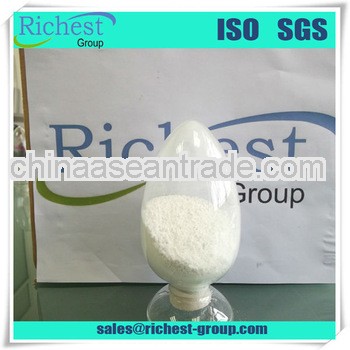

 Click to enlarge
Metal phosphides have been used as rodenticides. A mixture of food and zinc phosphide is left where the rodents can eat it.
Metal phosphides have been used as rodenticides. A mixture of food and zinc phosphide is left where the rodents can eat it. The acid in the digestive system of the rodent reacts with the phosphide to generate the toxic phosphine gas. This method of vermin control has possible use in places where rodents immune to many of the common poisons have appeared. Other pesticides similar to zinc phosphide are aluminium phosphide and calcium phosphide.
Zinc phosphide is typically added to rodent baits in amount of around 0.75-2%. The baits have strong, pungent garlic-like odor characteristic for phosphine liberated by hydrolysis. The odor attracts rodents, but has a repulsive effect on other animals; birds, notably wild turkeys, are not sensitive to the smell. The baits have to contain sufficient amount of zinc phosphide in sufficiently attractive food in order to kill rodents in a single serving; a sublethal dose may cause aversion towards zinc-phosphide baits encountered by surviving rodents in the future.
Rodenticide-grade zinc phosphide usually comes as a black powder containing 75% of zinc phosphide and 25% of antimony potassium tartrate, an emetic to cause vomiting if the material is accidentally ingested by humans or domestic animals. However, it is still effective against rats, mice, guinea pigs and rabbits, none of which have a vomiting reflex.
Classification: Rodenticide
Common name: zinc phosphide (E-ISO, JMAF, accepted in lieu of a common name); phosphure de zinc (F-ISO, accepted in lieu of a common name)
IUPAC name: trizinc diphosphide
Chemical Abstracts name: zinc phosphide
CAS RN : [1314-84-7]
Formulation types: AB; CP; PA; RB; SB.
Molecular formula: P2Zn3
Molecular weight: 258.1
Properties: Amorphous grey-black powder, with a garlic-like odour .
Toxicity:
Oral Acute oral LD50 for rats 45.7, sheep 60-70 mg/kg (M. A. Nekrasova, Sb. Rab., Leningr. Vet. Inst., 1964, No. 25, 372). Skin and eye Acute percutaneous LD50 for rabbits 2000-5000 mg/kg. Non-irritating to skin and eyes. Toxicity class WHO (a.i.) Ib; EPA (formulation) I EC classification F; R15/29| T+; R28| R32| N; R50, R53
Uses:
Rodenticide (for single ingestion). Reacts with stomach acids to liberate poisonous phosphine, which enters the bloodstream, and results in damage to the liver, kidneys and heart. Bait rodenticide for control of rats, mice, voles, ground squirrels, and gophers. Also used in tracking powder form for house mouse control.
Packing:
According to the customer's request